ZERNO.
01  Tri-X 400Print · film rebate
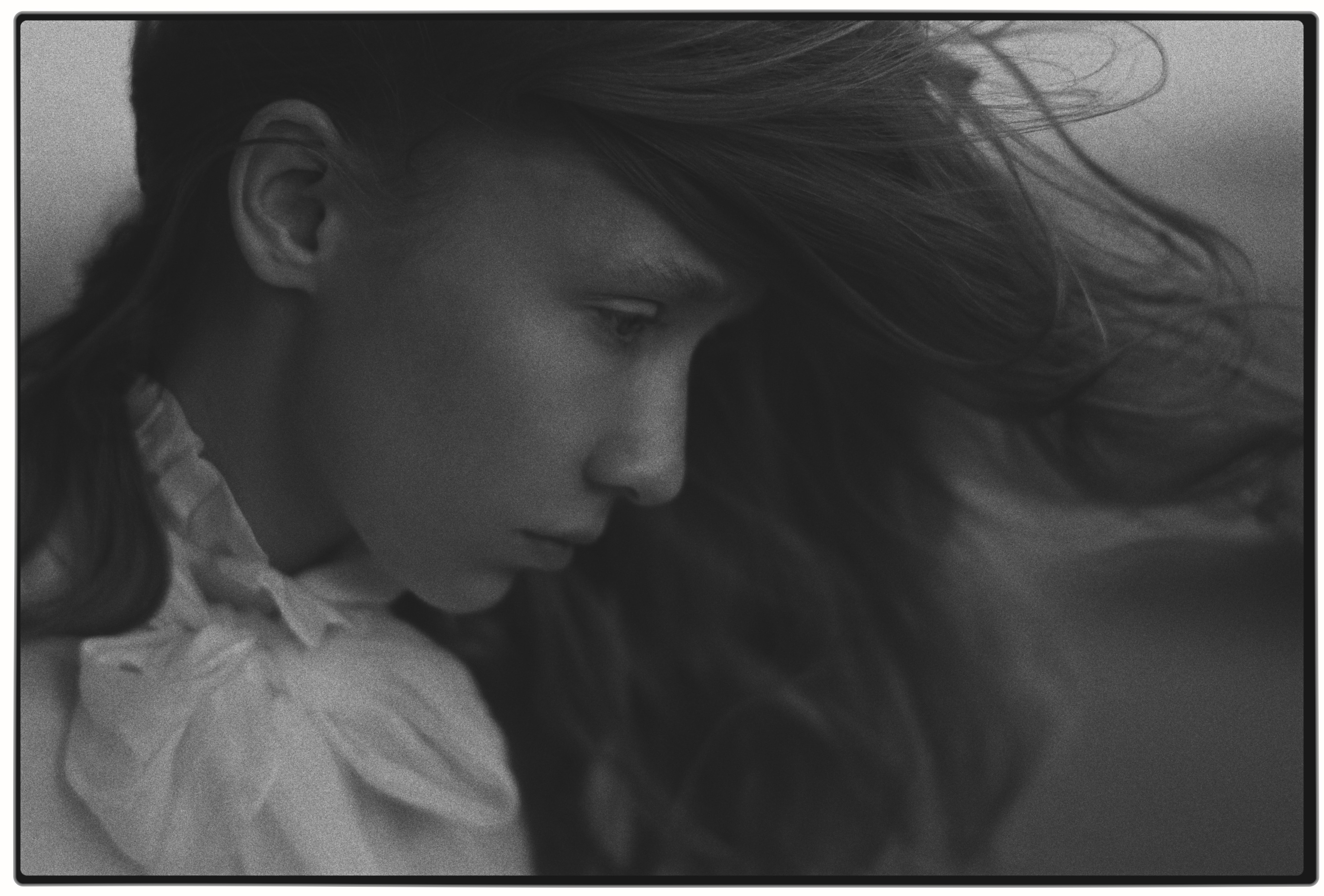
A portrait of a girl on Tri-X 400: a print with the film rebate, coarse grain
Paper · enlarger carrierZERNO 01A
Tri-X 400, a print with the film rebate: the grain is not laid over the picture — it grew in the emulsion. Click the frame — the full file opens, 2724 px: zoom in and look closely.
An app for Mac and Windows

The aesthetics of film
photography, for you

The analogue tradition has stood the test of time, and its aesthetics are a choice you never have to apologise for. In the age of the endless feed and generated pictures, a photograph that has passed through light and chemistry is a rarity again — and a sign of taste.

No need to agonise over dozens of controls — let history do the work for you. Simply choose the lens, the film, the paper and the printing. You never imagined a digital photograph could look like this.

Mac: you need a Mac that supports macOS 14 or later officially — Zerno renders the image on the graphics processor and requires Metal 2. The build carries no Apple signature yet: macOS will stop it on the first launch. It takes two minutes — how to open it →
Windows: Windows 11 and a graphics card with DirectX 12. The installer does not carry a developer certificate yet, and Edge or Windows may ask again — what to press →
Five days free — the whole program, with nothing held back, on either system.
12  Twelve printsDifferent films, papers and mounting
M-Glow · Kodachrome 64 · scanner frame Tri-X 400 · fibre-based warm Velvia 50 · scanner frame Petzval · HP5 Plus · carbon print UltraMax 400 · RA-4 · film rebate Tri-X 400 · chlorobromide · mount Polaroid 600 · pack at 18 °C M-Glow · T-Max 400 · graded No. 3 Petzval · Portra 800 · RA-4 SFX 200 · platinotype Polacolor ER 8×10 · on the table Wollaston meniscus · Fomapan 400 push +1 · grade 4
Finished frames in different stylesZERNO 12A
Each took its own path: lens, film, development, paper and mounting chosen for the shot. Click — the gallery opens, where every print can be seen whole and at 1:1.
01 · How it works

Not filters — the magic of light

ZERNO takes light along the same path it has taken in photography for a century and a half: filter, lens, film, development, print. Not colour matching, not a filter over the picture — a computational physical model in which everything happens for real, only in numbers. We compute how the rays of light travel, we grow the grain and we print the result as a separate step — down to the structure of the paper. That is why it all looks so pleasing and refined: nature has excellent taste.

01.1

Lenses with character

Dark corners, a soft glow from the glass itself, swirly bokeh, sharpness that melts towards the edge of the frame. Each lens has its own, and all of it obeys the aperture: stop down and the glass calms, open up and it draws again. This is behaviour, not a flat "vintage" preset.

01.2

Film glow and the subtle effects

Bright light punches through the emulsion, bounces off the base and glows around street lamps, windows and speculars on water — that is halation, the most recognisable mark of film. Beside it, the smaller things: accentuated borders between light and shade, the softness of the emulsion itself, the way the layers of a colour negative mute each other's colour.

01.3

Grain grows, it isn't sprinkled on top

The picture is assembled from the grains themselves, as on film — on colour film, from clouds of dye. So a thin branch or a hair thickens, breaks and dissolves in the grain: that is what happens on a print, and it is what never happens with noise laid over a finished frame.

01.4

Printing is a separate step

A negative still has to be printed, and that is half the picture: its own paper, its own contrast, borders and rebate. Silver, minilab, scan, the printing press — or one of fourteen hand processes, from blue cyanotype to bromoil, which is worked in with a brush.

01.5

Every frame its own

The negative's rebate, a Polaroid's blotches, the grain, the raggedness of a brush stroke — every frame has randomness of its own. It is not recomputed while you look and edit; and if you don't like the pattern — reroll the dice.

13  InstantSX-70 · B&W · Wide · FP-100C Silk
One portrait on four instant packs: Polaroid SX-70, SX-70 B&W, Instax Wide, Fujifilm FP-100C Silk
Direct positive · no printing involvedZERNO 13A
The frame knows the card's format and orientation; the blotches and roller marks are each frame's own. The pack develops at the temperature of the air — the winter blue of a cold day comes by itself.
02 · Library

What's inside ZERNO · version 5

72
films
colour negative, black and white, slide, instant, Prokudin-Gorsky's three plates and glass — wet collodion and the dry plate; plus "Neutral", for when no film is needed at all
exposure · format 135 / 120 / 4×5 / plate / instant · interlayer physics · datasheet grain · condition: redscale and expiry up to 80 years
12
lenses
from modern aspherics to the Petzval, the Wollaston, soft focus and a pinhole — a camera without glass
the aperture controls glow, vignetting and swirl · the strength and character of the aberrations
41
papers and printing processes
scan and transmitted light, B&W and colour printing, ambrotype and tintype, fourteen alternative processes — nine of them from the 19th century — and reproduction: inkjet, offset, a CRT screen
contrast, print brightness, "black" and "white" · sheet size · brush edge · relief · screen and feed banding
20
filters
colour, diffusion, graduated and star — and a conversion filter by temperature and tint
four slots: colour, diffusion, graduated, star — all combine; the graduated and the star are computed before the glass
Development
processes, push and pull
D-76, Rodinal, fine grain, stand; iron and pyro for glass; C-41 machine, hand tank and bleach bypass; E-6; instant
tank and pack temperature · alternative recipes
Mounting
rebates, mounts and the table
borders, film rebate by format, platemark, embossed lines, studio stamp and signature
mount: classic, double, embossed, French · a table under the print, with a shadow
The full list → Every film, lens, paper and knob — by name, on one page.
03 · The point
And above all — what comes out
is truly beautiful.
Give your digital photographs
the softness and breath of film.
04 · Licence

What it costs

$77a year
  1. Two activations — any two computers, Mac or Windows
  2. Every version of the program released during the year
  3. The new films, lenses, printing, filters and presets that arrive during the year

Five days free — the whole program, with nothing held back: download it, press "Try it for 5 days" in the licence window — and everything works; the files come out exactly the same as with a licence. You need the internet at every launch — the server keeps count of the days. When the five days are over, your projects stay where they are; a licence opens them as they were.

Card payment on the site is currently available for cards issued in Russia only. From anywhere else, write to ask@zerno.photo — we will sort out the payment and send your activation code the same day.

The conditions are in the licence agreement.